


Tile Club - Match Puzzle Games
4.85.70K Reviews
App Specs
- Version
- 3.6.0
- Updated On
- License
- Free
- Downloads
- 100,000,000+
- Developer
- GamoVation
- Categories
- Puzzle
- Platform
- Android, iOS
Screenshots


 Analysis by AppCompare
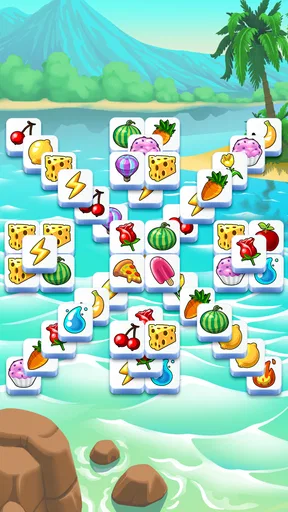
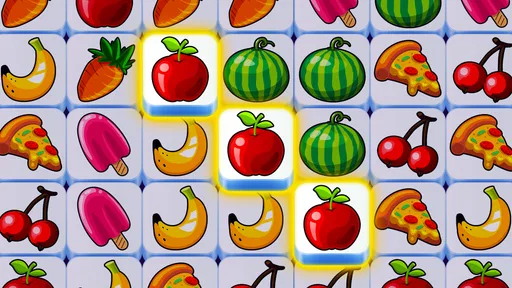
I usually judge a tile puzzle by its very first decision: can I look at the board, understand what a move will do, and feel curious about the next one? In Tile Club - Match Puzzle Game, that basic action is easy to grasp, but the board’s patterns and obstacles give me reasons to pause rather than tap blindly. It suits the small gaps in a day when I want a task with a clear goal, not a long story or a complicated set of controls.
The central appeal is the short cycle of choosing tiles, seeing the board change, and deciding whether to keep going. A successful match gives a little sense of order; a less useful move can leave a more awkward puzzle to solve. That back-and-forth is what makes the game feel like a puzzle rather than a passive way to watch animations. I find it most satisfying when I take a moment to scan the available choices before acting.
How to make a short session count
For a quick break, I would treat each level as a self-contained mental reset. Start by looking for the move that opens up the most useful options, rather than reaching for the first obvious match. When the layout gets less forgiving, that small habit can matter more than rushing. It is also a practical way to keep a session light: one board, a few considered moves, then back to whatever you were doing.
Guides and Analysis on Tile Club - Match Puzzle Games
That makes it a better fit for a commute break, a quiet wait, or a few minutes between everyday tasks than for someone seeking a deep, uninterrupted strategy campaign. The controls and basic objective are approachable, while the changing arrangements provide enough friction to keep attention involved. I would still avoid playing when I need to stay focused on something else; a board that looks simple can invite one more attempt.
Where the challenge comes from
Tile matching is familiar, but this is not the same rhythm as the usual match-three game, where swapping pieces often creates cascades across a grid. Here, the focus is on matching tiles and managing the puzzle in front of you. Patterns and obstacles change how freely you can act, so I get more value from observing the board than from tapping quickly. The distinction is useful if you enjoy visual sorting and planning but are tired of chasing chain reactions.
Power-ups add another decision: use help now to make the current position easier, or hold it for a moment when the board becomes harder to manage? I prefer not to spend one automatically as soon as it appears. First I check whether a normal move can improve the layout; then I consider whether a row-clearing or reshuffling option would solve a genuine problem. That way, the tools feel like choices rather than buttons to press whenever progress slows.
Who will enjoy the loop
I would recommend it to people who like bite-sized puzzles, gradually tougher boards, and the small reward of finding a better move after a brief pause. It is also friendly to newcomers: you can understand the broad idea without needing a long tutorial or specialist puzzle knowledge. If you prefer a game that rewards careful attention in short bursts, its simple premise can be an advantage rather than a lack of depth.
Worth Reading Before You Choose

Basketball Stars: Multiplayer Is Fast, but Can It Recover When Matches Go Wrong?

WEBTOON Turns Phone Updates Into a Better Reading Routine

Link to Windows Runs on Shared Habits, Not Social Feeds

How Alibaba.com Dominates the B2B Marketplace

Metro's Quiet Rise: Redefining Mobile Communication

Harnessing Ecosystem Power with Phone Tracker by Number
On the other hand, I would steer players elsewhere if they want a narrative adventure, a competitive action game, or a puzzle experience where every stage is built around a completely different mechanic. Repeated matching can become familiar, and someone who dislikes replaying a tricky board may find the challenge more irritating than satisfying. It is also worth remembering that optional purchases are available, so I would approach any prompts to spend with the same care I use in other free mobile games.
Getting Hooked on Tile Matching
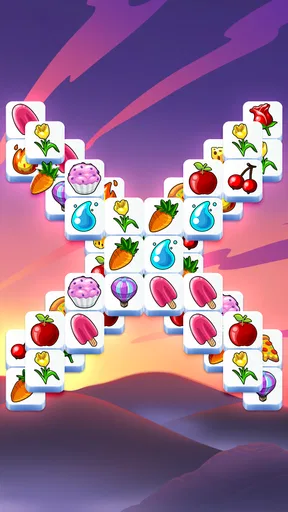
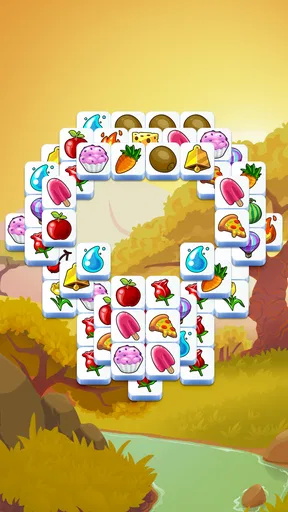
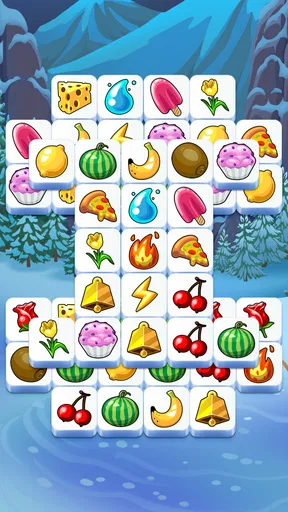
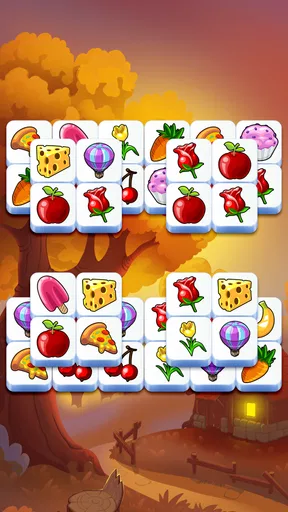
At first glance, Tile Club - Match Puzzle Game might seem like just another match-three game. But trust me, it’s got a unique twist that keeps things fresh and exciting. The game challenges you to match tiles, but with a variety of patterns and obstacles that keep you on your toes. The levels are cleverly designed, gradually increasing in difficulty, making each victory feel earned.
One of the coolest features is the power-ups. They’re not just your standard boosters; you get to strategize on how best to use them. Whether it’s clearing a whole row or reshuffling the board, the power-ups add a layer of strategy that makes you think twice before making a move.
Visuals and Soundtrack
Let’s talk about the visuals. They’re vibrant and colorful, giving the game a lively feel that’s just plain fun to look at. The design is clean, which is something I always appreciate in a puzzle game. It doesn’t overwhelm you but keeps you engaged with its charming aesthetics.
And the soundtrack? It’s a delightful accompaniment that doesn’t get annoying, even after hours of play. It’s got this catchy tune that perfectly matches the playful vibe of the game.
Why It's Worth Your Time
Now, I know there are a ton of puzzle games out there, but Tile Club - Match Puzzle Game stands out with its engaging gameplay and smart design. It’s perfect for a quick break or a longer gaming session if you’re up for the challenge. The game rewards you just enough to keep you hooked without feeling like it's asking you to spend endless hours to progress.
Another thing I love is the community aspect. You can join clubs and participate in challenges with other players. It adds a social element that’s a nice change from playing solo all the time. It’s like having a little puzzle party right in your pocket.
Final Thoughts
All in all, Tile Club - Match Puzzle Game has quickly become one of my favorites. It’s a perfect blend of challenge and fun, with enough depth to keep you coming back for more. Whether you're a puzzle game veteran or just looking for something new to try, it’s definitely worth a download.
So, why not give it a shot? Dive into the world of tile matching and see if you can become the ultimate puzzle master!
What the repeat-session rhythm feels like
The satisfying part for me is not simply clearing a board; it is the small loop around that result. I choose a match, watch the available space and options change, and get a quick signal about whether my decision helped. When the board becomes awkward, I either rethink the order of my moves or consider a power-up. A win gives me a reason to try another layout, while a stumble encourages a reset with a slightly better plan. That is a modest reward, but it is well suited to a phone game meant to be picked up and put down.
There is a trade-off in that rhythm. Because the actions are easy to repeat, a spare minute can turn into several rounds before I notice. I find it useful to decide in advance whether I am playing one level or settling in for a longer stretch. That simple boundary keeps the game in the role I want it to fill: a compact diversion, not an automatic habit that takes over every idle moment.
How I would approach a difficult board
When a board feels tight, I try to identify which move preserves the most options instead of treating every visible match as equally good. I also avoid using a reshuffle just because the current arrangement is inconvenient; first I check whether a different sequence of ordinary matches will open space. A row-clearing tool makes more sense when it addresses a specific blockage. This is not a guarantee of success, but it gives each power-up a purpose and makes a win feel more like a decision than a lucky tap.
That approach also helps manage frustration. If I have made several moves without improving the position, I take a brief pause and inspect the whole board again. Puzzle games can make a player focus too closely on one tempting tile, and stepping back often makes another route easier to notice. For someone playing while tired or distracted, the game is still accessible, but the more satisfying results come when I give the board a little attention rather than playing entirely on autopilot.
A realistic place for it in the day
Imagine waiting for a friend who is running late, with enough time to do something but not enough to start a film or a lengthy game. This is the kind of gap where I would open it: the matching objective is immediately understandable, and I can focus on a single puzzle without needing to remember a complicated plot. The same applies to a quiet coffee break or a short pause after finishing a task. If I am on a crowded commute or need to watch for announcements, I would keep the session brief and avoid getting absorbed in a difficult board.
The game’s social layer may appeal to someone who likes having a shared activity around a solo puzzle. Clubs and challenges give that player another reason to return beyond the next board. If I mainly want a private, offline-feeling logic exercise, that social side is less important to the decision; if friendly participation helps me stay interested, it can add welcome variety. I would choose based on whether that kind of community context genuinely motivates me, rather than assuming every puzzle player needs it.
How it compares with other puzzle choices
Against classic match-three games, the main difference is the kind of attention it asks for. I am not primarily looking for a sequence of swaps that triggers cascading matches; I am considering tile combinations, patterns, and obstacles in the current puzzle. Compared with a pure logic puzzle, it feels more casual and visually lively, with power-ups that can soften a difficult position. That middle ground is its strength: it is more involved than a very simple tapping game, but it does not ask me to learn a complex ruleset before I can enjoy a round.
If you want a puzzle with a fixed, carefully reasoned solution and no assistance tools, a traditional logic game may suit you better. If you want fast reactions, dramatic competition, or a story that drives every level, this is not the strongest match either. I see it as an accessible tile puzzle whose appeal depends on enjoying repeated board decisions. That is a specific taste, and knowing it beforehand makes it easier to decide whether the loop will feel calming or repetitive.
Practical details before you install
GamoVation’s puzzle game is free to install, has an Everyone age rating, and includes optional in-app purchases priced from $0.99 to $99.99 per item. I would not treat the free entry point as a promise that every optional offer is irrelevant; instead, I would decide for myself whether a purchase adds enough value before spending. Its large audience—over 100 million installs, a 4.8 average from around 696,000 ratings, and roughly 5,100 written reviews—suggests that the straightforward tile-matching format has broad appeal, but popularity cannot tell you whether its particular pace is right for you.
The game first arrived on May 15, 2023, and version 3.3.0 is listed for devices running Android 6.0 or later. Those details make compatibility easy to check before downloading, especially if you are using an older Android device. For someone asking whether it is beginner-friendly, I would say yes at the level of understanding the basic puzzle, while later obstacles can still demand patience. For someone wondering whether purchases are required, the game is free to start, but optional paid items are part of the experience.
My take on the staying power
What keeps me coming back is the balance between a familiar action and a board that can make me reconsider my first instinct. The reward is immediate enough for a short session, and the option to use power-ups gives me a second route when a puzzle tightens. The downside is equally clear: the central activity remains tile matching, so players who need constant mechanical novelty may lose interest. The soundtrack and bright visuals support the mood, but they do not change that basic fact.
For me, the best way to enjoy it is to play deliberately, take advantage of the pause before a move, and let a completed puzzle be a natural stopping point. If you like casual matching with a little planning, a gradual challenge, and a social option, I think it is an easy game to try. If you prefer deep strategy, a new mechanic on every stage, or a strictly purchase-free mobile experience, another kind of puzzle may fit better. The loop is simple, but when I want a friendly brain break, that simplicity is exactly why another round can be appealing.
Pros
- Engaging gameplay keeps you entertained for hours.
- Simple controls make it easy to pick up and play.
- Beautiful graphics enhance the gaming experience.
- Frequent updates with new levels and challenges.
- Perfect for quick sessions during breaks.
Cons
- In-app purchases can be pricey.
- Some ads can be intrusive.
- Limited offline functionality.
- Occasional bugs may disrupt gameplay.
- Difficulty spikes in later levels.
FAQs for Tile Club - Match Puzzle Games
What is the main objective of Tile Club - Match Puzzle Game?
Tile Club - Match Puzzle Game aims to challenge players with engaging match-3 puzzles. The objective is to align three or more identical tiles to clear them from the board. As you advance, the complexity increases, introducing new elements and obstacles that require strategic thinking to overcome.
Are there any in-app purchases or ads in Tile Club?
Yes, Tile Club offers in-app purchases that allow players to buy boosters, extra lives, or other enhancements to improve gameplay. Additionally, the game features ads, which can be removed through a purchase. These elements help support the developers while providing players with options to enhance their gaming experience.
Is Tile Club suitable for all ages?
Tile Club is designed to be family-friendly, making it suitable for players of all ages. The colorful graphics and intuitive gameplay appeal to children, while the strategic challenges keep adults engaged. However, parental guidance is advised for younger players due to potential in-app purchases.
Does Tile Club require an internet connection to play?
Tile Club can be played offline, making it a great option for entertainment on the go. However, certain features, such as leaderboards and daily challenges, require an internet connection to access. Playing online also enables synchronization across devices, ensuring progress is saved.
How does Tile Club keep the game challenging and engaging?
Tile Club maintains its appeal through diverse levels and creative obstacles. As players advance, they encounter new challenges like locked tiles, limited moves, and unique power-ups. Regular updates introduce fresh content, ensuring the game remains captivating and provides long-term enjoyment.


